Short answer: yes, if you want a picture of 100 inches or more and you are ready to pay for a proper screen. An ultra short throw (UST) projector gives you a wall of picture from a box that sits on your media console, for less than a television of the same size. It is not worth it under 85 inches, in a room flooded with sun, or if you expect OLED blacks. On November 13, 2026 the 15 projectors we compare started at $1,699; a complete 100-inch setup with a screen starts around $2,300.
What do you actually get for the money?
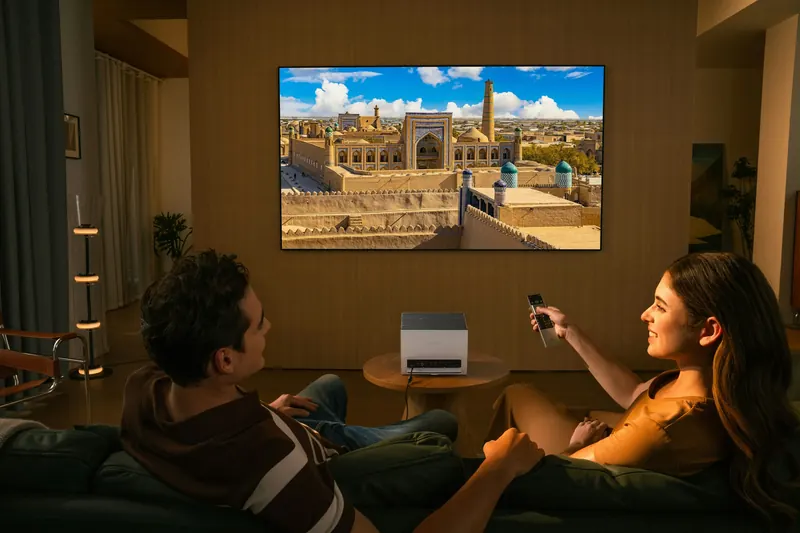
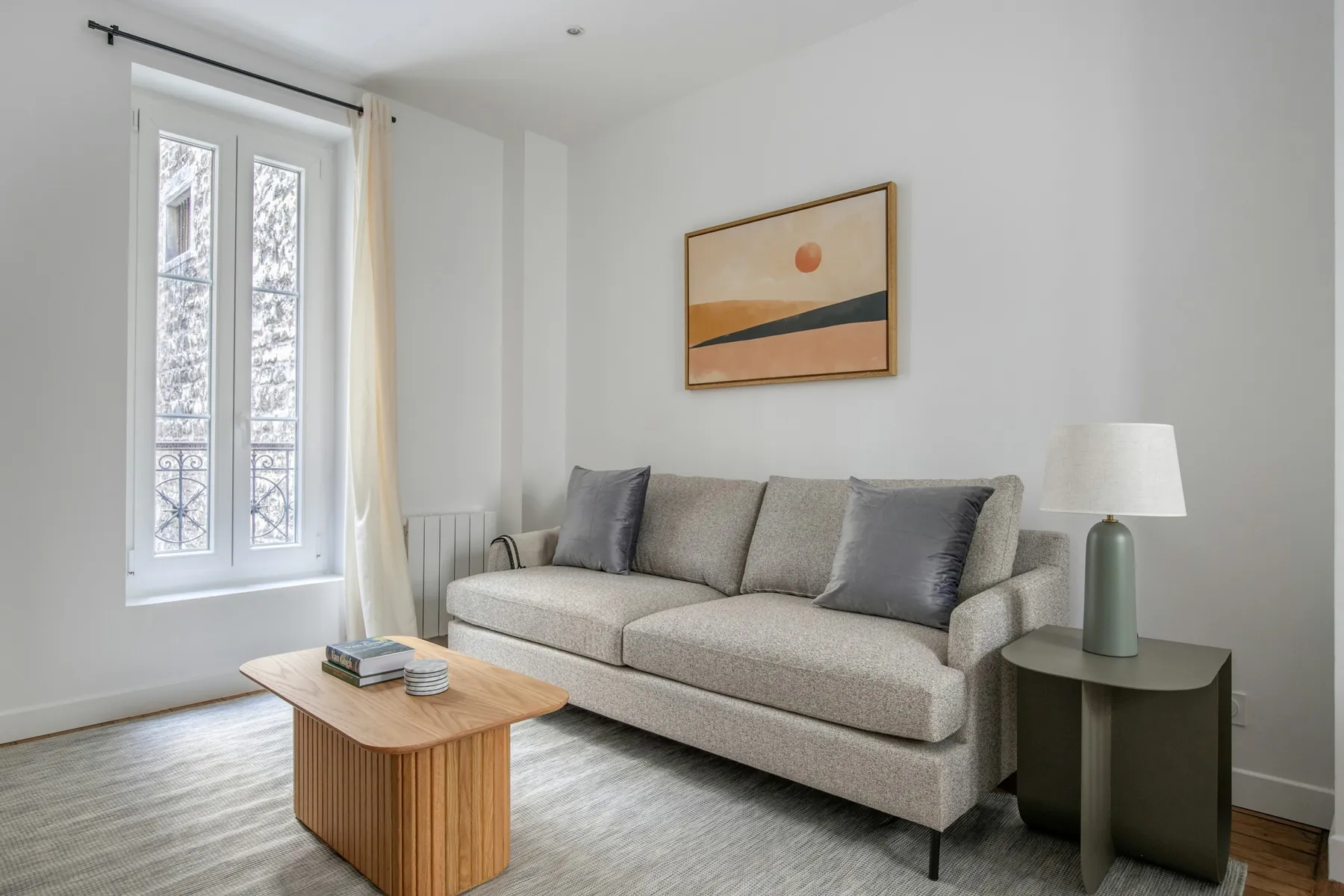
Size, mostly. A UST projector throws a 100 to 150-inch picture from a few inches away from the wall. No ceiling mount, no cable run across the room, and nobody walks through the beam on the way to the kitchen. The machines we compare weigh between 10 and 35 lb, so the box fits through any door, which you can't say of a 100-inch television.
You also get a living room that looks like a living room. Switched off, a screen is a quiet gray rectangle, or nothing at all if you pick a floor-rising one. And the picture itself has moved on a lot: every model on our list is sold as 4K, most are RGB triple lasers that claim more than 100% of the BT.2020 color space, and the brightest now claim 5,000 to 6,000 lumens. That last point is what changed the answer to this question. Five years ago a UST was a movie-night machine. Today the bright ones do a television's job.
What does a complete setup cost in 2026?
Count three lines, not one. First the projector: from $1,699 to about $6,000 on our list on November 13, 2026. The sweet spot sits between $1,699 (XGIMI MIRA Pro) and $2,499.99 (Hisense PX3-PRO).
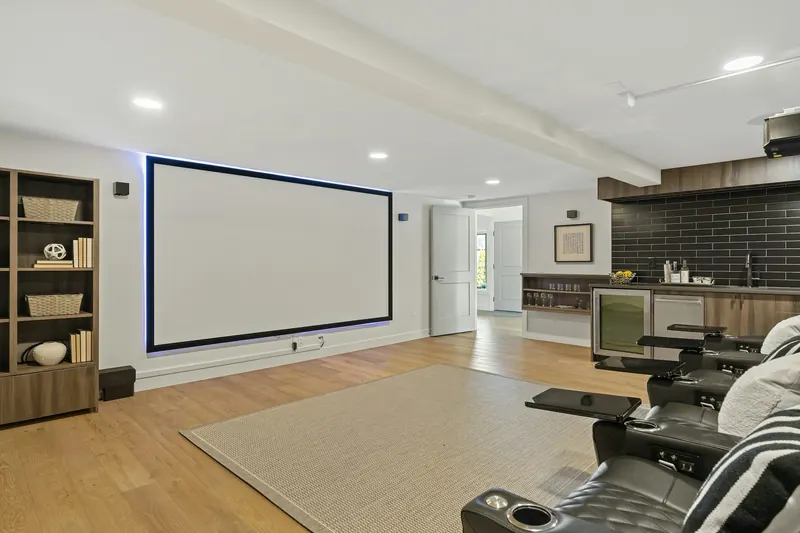
Second, the screen, and this is the line people forget. A UST needs a flat, tensioned screen, and in a room with any daylight it needs an ALR screen built for ultra short throws. Plan $500 to $1,500 for 100 to 120 inches, more for a motorized floor-rising model. Our guide to ALR screens for UST projectors explains the two types.
Third, maybe sound. Built-in speakers run from 20 W to 116 W on our list. Many owners keep them; movie fans add a soundbar, as they would under a TV.
So: about $2,300 for a sensible 100-inch setup, $3,500 to $4,500 for a very good 120-inch one. Some brands sell projector and screen together, and the math can be surprising. See our ranking of UST projector and screen bundles before you buy the two separately.
What are the real downsides?
There are four, and you should know them before you spend a dollar.
- Black levels. A projector can't switch a pixel off. Black is dark gray, and how dark depends on native contrast and on your room. Most models here state 3,000:1; the AWOL Aetherion Pro states 6,000:1. Neither is an OLED.
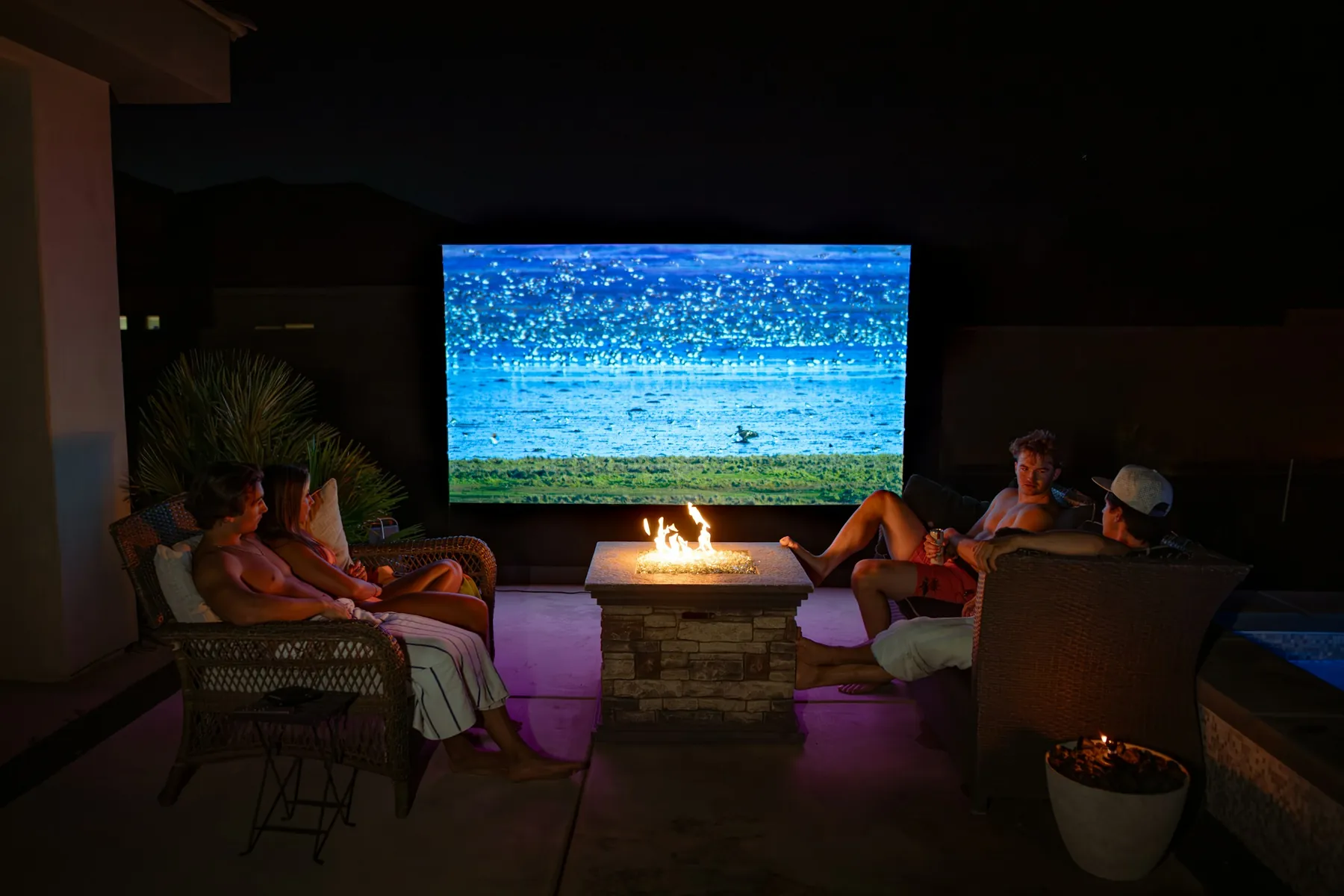
- Daylight. Sun on the screen washes out any projector. With 3,000 lumens and an ALR screen you can watch in the afternoon with the blinds half open. Direct sun still wins.
- Fussy placement. The lens sits so close to the screen that a quarter inch of movement shifts the picture by an inch. The first evening is spent sliding a cabinet around. Our UST projector setup guide makes it shorter.
- The screen is not optional. A bare wall shows every bump under light that arrives at such a steep angle, and it throws ceiling light straight back at you.
None of these is a deal-breaker. All of them are the reason some buyers send the box back in week two, so better to hear it from us now.
Video: "The Truth about Switching to a Projector! [120” 4K Laser Ultra Short Throw]", The Tech Chap on YouTube. Not made by us; chosen because it shows the projector or the topic clearly.
How long does a laser UST projector last?
Longer than you will probably keep it. The brands on our list state 20,000 to 30,000 hours for the laser light source. At four hours a day, 25,000 hours is about 17 years. There is no lamp to replace, which was the hidden cost of older projectors.
Those are the makers' figures, and they describe the light source, not the warranty. Warranties here run one or two years, and return windows from 14 to 30 days where the brand states one at all. Hisense, for example, gives no return window on its product pages, so the retailer's policy applies. For a 20 to 35 lb box, read the return terms before the spec sheet. We score both in every review.
Who is a UST projector worth it for?
It is worth it if you see yourself in one of these.
- You want 100 inches or more. This is the whole point. At 120 inches there is rarely a television to compare with at a sane price.
- Movies and big games are the main event. A picture that fills your field of view changes how a film feels, and reflected light is easy on the eyes over a long evening.
- You can control the light a little. Curtains, blinds, or simply a wall that doesn't face the windows.
- You rent, or you move often. Nothing is bolted to the ceiling, and the whole system leaves in two boxes.
If two or more of these sound like you, the money is well spent. The UST projector vs TV comparison goes through the trade-offs one by one.
Who should skip it and buy a TV?
Skip it if you want 85 inches or less. Televisions that size are bright, cheap and need no screen, and no projector on our list beats them there.
Skip it if your screen wall faces a row of south windows you will never cover. And skip it if your main use is news and daytime shows in a sunlit kitchen-living room: you would be paying for size and fighting the light every day.
Last case: you want perfect blacks for dark films in a dark room and you are happy at 77 or 83 inches. That is OLED territory. A projector gives you scale; it doesn't give you that.
If you buy one, where should you start?
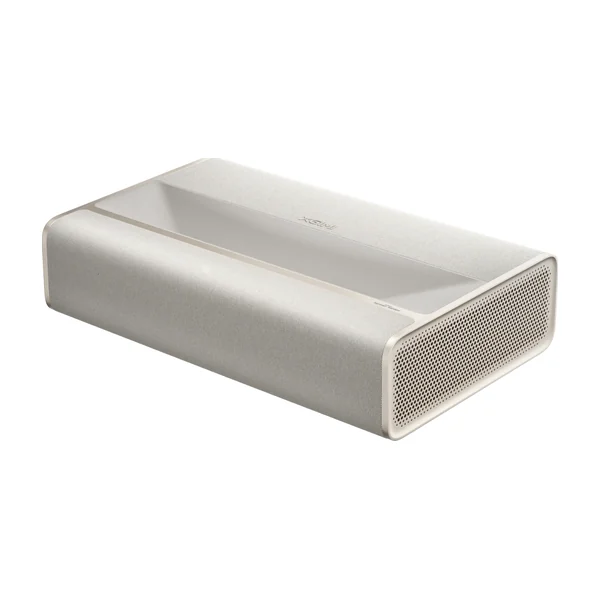
Start with the room, then the budget. For a first UST in a normal living room, the XGIMI MIRA Pro (9.5/10) is the easy recommendation: 3,000 lumens claimed, triple-laser color and automatic screen alignment for $1,699. Its limit is size: XGIMI rates it up to 120 inches.
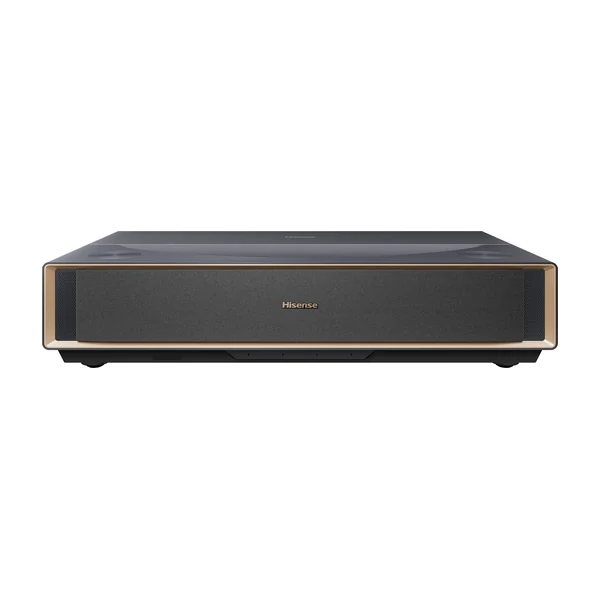
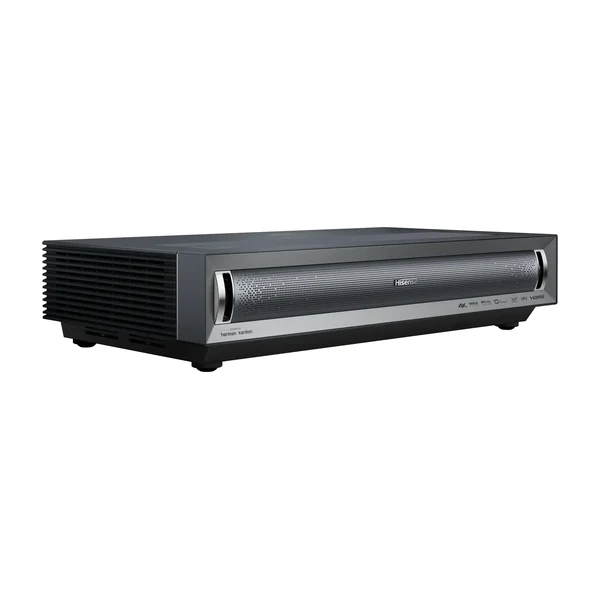
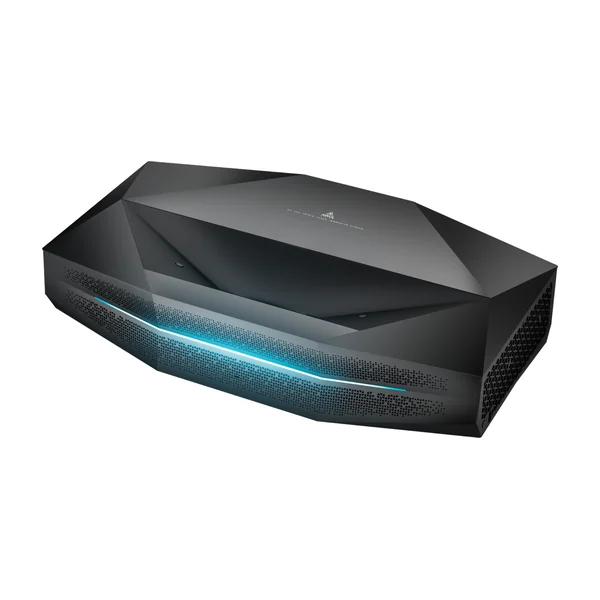
If the projector replaces your TV, with streaming apps and real speakers, look at the Hisense PX3-PRO (9.1/10) at $2,499.99, or at our ranking of the best laser TVs. If movie nights in a dim room are the point, the AWOL Aetherion Pro (9.2/10) has the contrast for it. And if the budget stops at two thousand dollars, we rank the best UST projectors under $2,000 separately.
Whatever you pick, put the screen in the budget from day one. A $1,700 projector on the right screen beats a $3,000 one on a painted wall.
The projectors in this guide, side by side
| Projector | ||||
|---|---|---|---|---|
| Brightness (brand) | 3,000 ISO lumens | 2,500 ANSI lumens | 3,000 ANSI lumens | 2,600 ISO lumens |
| Light source | RGB triple laser | RGB triple laser | RGB triple laser | RGB triple laser |
| Throw ratio | 0.175:1 | 0.2:1 | 0.22:1 | 0.2:1 |
| Native contrast | Not stated | 3,000:1 | 3,000:1 | 6,000:1 |
| HDR formats | Dolby Vision, HDR10+ | Dolby Vision, HDR10+ | Dolby Vision, HDR10+, IMAX Enhanced | Dolby Vision, HDR10+, IMAX Enhanced |
| Lowest input lag | 1 ms (brand) | No figure | No figure | 1 ms (brand) |
| Smart TV | Google TV | Google TV | Google TV with Netflix | Google TV |
| Warranty | 2-year | 2-year | 2-year | 2-year |
| Where to buy | Check price at XGIMI | Check price at Hisense | Check price at Hisense | Check price at AWOL |
✓ marks the best figure of the row. Prices checked November 13, 2026 on each brand's own US store.