Short answer: it depends on the size you want. Up to about 85 inches, a television is brighter, simpler and usually cheaper. From 100 inches up, an ultra short throw (UST) projector with an ALR screen gives you a bigger picture for less money, in a box that one person can carry. A TV still has deeper blacks and more punch in a sunlit room; a projector gives you a wall of picture that disappears when you switch it off. If you want 100 to 120 inches, start with a projector around $1,699 to $2,499.99 and a $600 to $1,200 screen.
What is actually different between a UST projector and a TV?
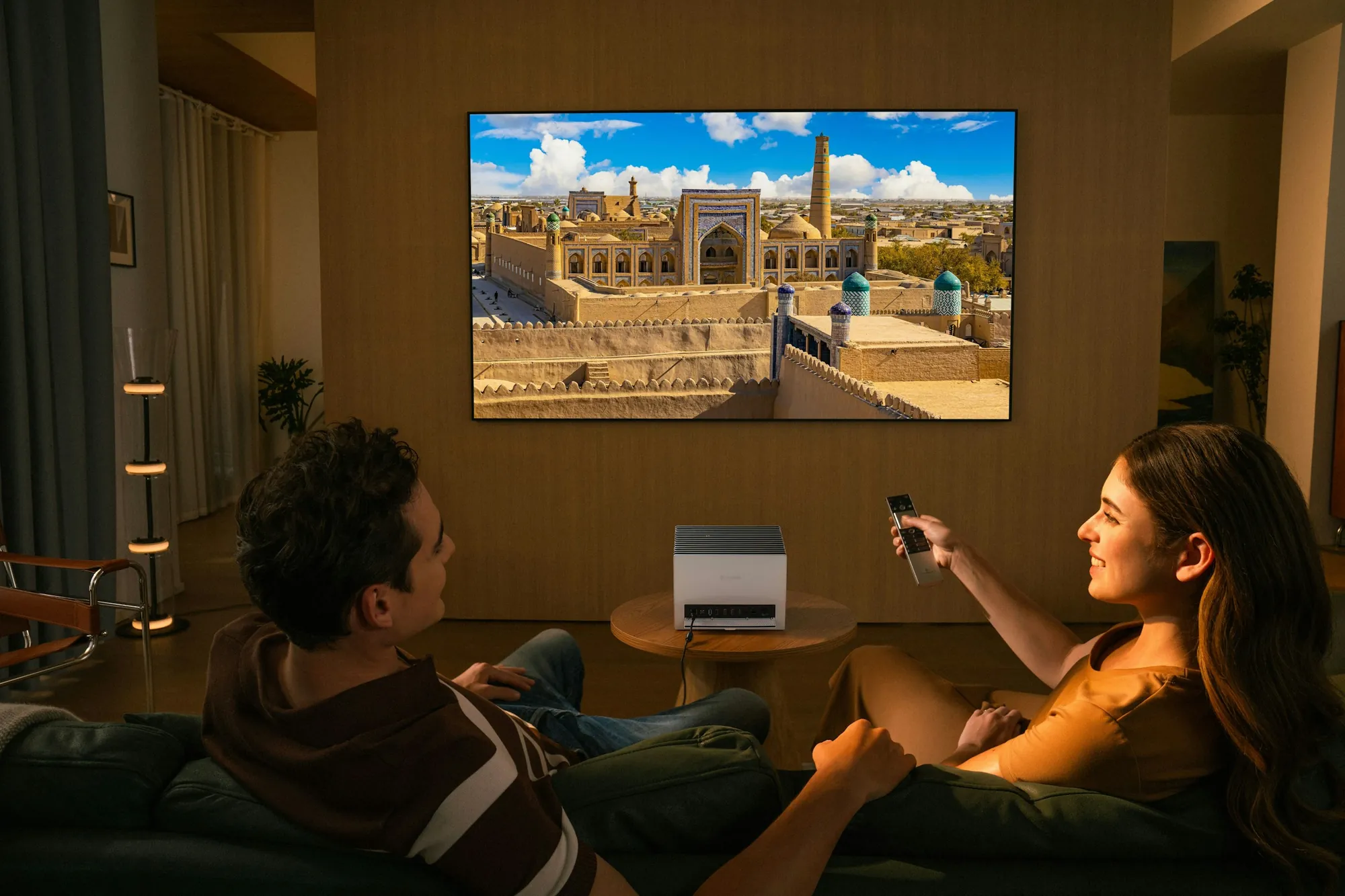
A television makes its own light, pixel by pixel, behind a sheet of glass. A projector makes the picture inside a small box and throws it onto a separate screen. An ultra short throw projector does that from a console right under the screen, a few inches from the wall, which is why brands call it a "laser TV": it lives where a television would.
That difference explains everything that follows. A TV's size is limited by the glass you can ship and carry. A projector's size is limited by your wall: the same 20 lb box makes a 100-inch picture or a 150-inch one. On the other hand, a TV decides how black its blacks are; a projector's blacks are whatever your room and screen allow, because black on a screen is simply the absence of light.
At what size does a projector start to make sense?
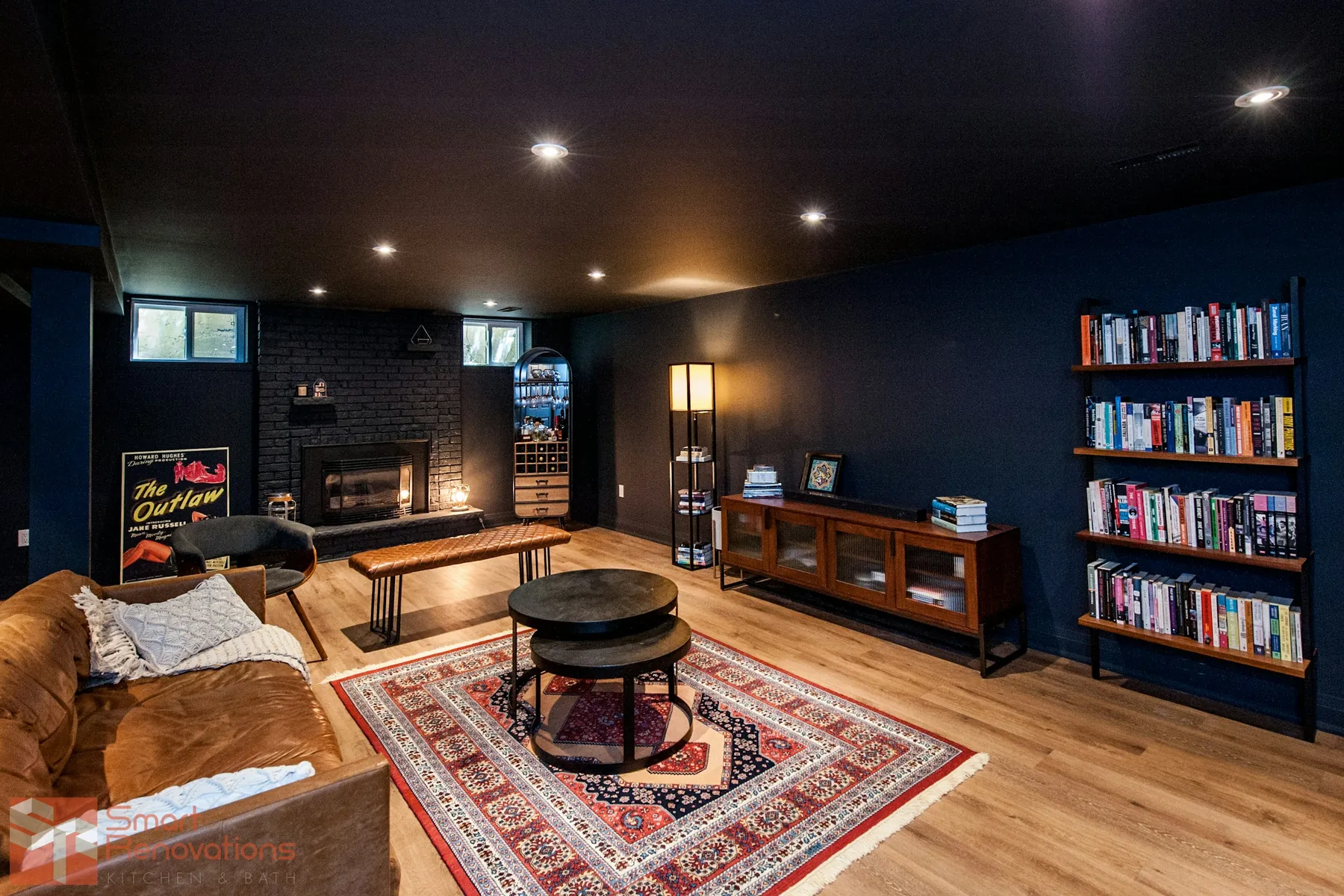
Around 100 inches. Below that, televisions have become very good and very cheap, and nothing we compare beats an 85-inch TV on brightness or simplicity. Above it, TV prices climb steeply with every size step, and the object itself becomes a problem: a 98 or 100-inch panel is a two- or three-person carry in a box that has to get through your door, up your stairs and onto a wall that can hold it.
A UST projector for the same picture weighs 10 to 35 lb in our comparison. The screen arrives rolled or as a frame you assemble in the room. And you are not stuck at 100 inches: most of the 15 projectors we compare are rated for 120 or 150 inches, and four go to 200. If a really big picture is the dream, this is the practical way to get it.
Which one looks better in a bright room?
The TV, and it isn't close in direct sun. A good mini-LED television puts out several times the light per square inch of any projector, so reflections and daylight bother it far less.
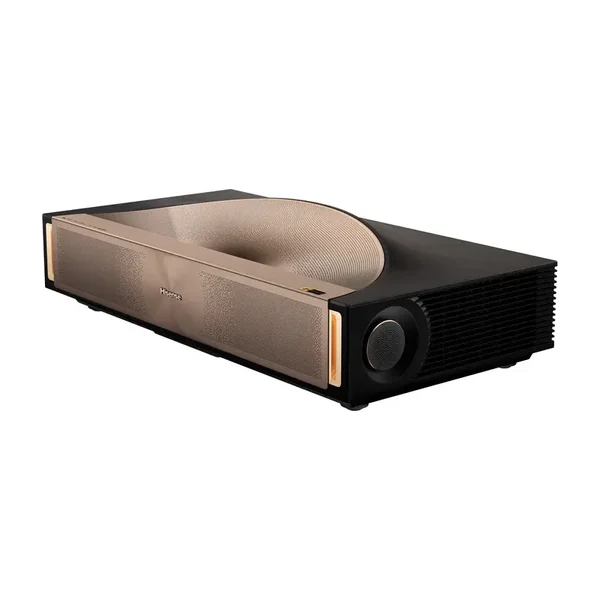
A projector can still be a daytime screen if you do two things. First, buy enough lumens: 3,000 or more for a 100-inch picture in a living room. The Hisense L9Q claims 5,000 ANSI lumens and the AWOL LuxVision 6,000 ISO lumens for that reason. Second, use an ALR screen made for ultra short throws, which rejects the light coming from windows and ceiling lamps. With both, sports on a Sunday afternoon looks good with the blinds half open. Our ranking of UST projectors for bright rooms lists the ones built for it.
Video: "100" UST Laser Projector vs 98" TV - Here's the 𝗕𝗥𝗨𝗧𝗔𝗟 Truth!", HDTVTest on YouTube. Not made by us; chosen because it shows the projector or the topic clearly.
Which one looks better for movies at night?
Here it gets interesting. An OLED TV has perfect blacks, and no projector matches that: in a dark scene, a projector's black is dark gray. How dark depends on its native contrast, which is why we score it. The AWOL Aetherion Pro states 6,000:1; most rivals state 3,000:1.
But size changes how a film feels. A 120-inch picture fills your field of view the way a cinema does, and reflected light is gentle on the eyes over a three-hour movie. Triple-laser projectors also cover more of the BT.2020 color space than most televisions; Hisense, AWOL and XGIMI all claim 107 to 110%. People who buy a projector for movie nights rarely go back, even knowing the blacks are not OLED blacks. If that is your use, see our ranking for home theater.
What about gaming, sound and everyday use?
Gaming used to be a projector's weak point. It no longer has to be: several models publish an input lag between 1 and 8 ms in their fastest mode, and under 20 ms at 4K. Check the figure and the resolution it applies to; the gaming ranking does that for you. A TV still has the edge for 4K at 120 Hz, which only one projector on our list offers.
Sound is better than you would expect, because the cabinet is big. Built-in speakers run from 20 W to 116 W here, most with Dolby Atmos decoding. And for daily use, the current models boot into Google TV or Tizen like a television: one remote, Netflix, voice search. Two habits change. A projector takes a few seconds to light up, and somebody will eventually walk up to the console and block the bottom of the picture with their head. You get used to both.
What does each option really cost?
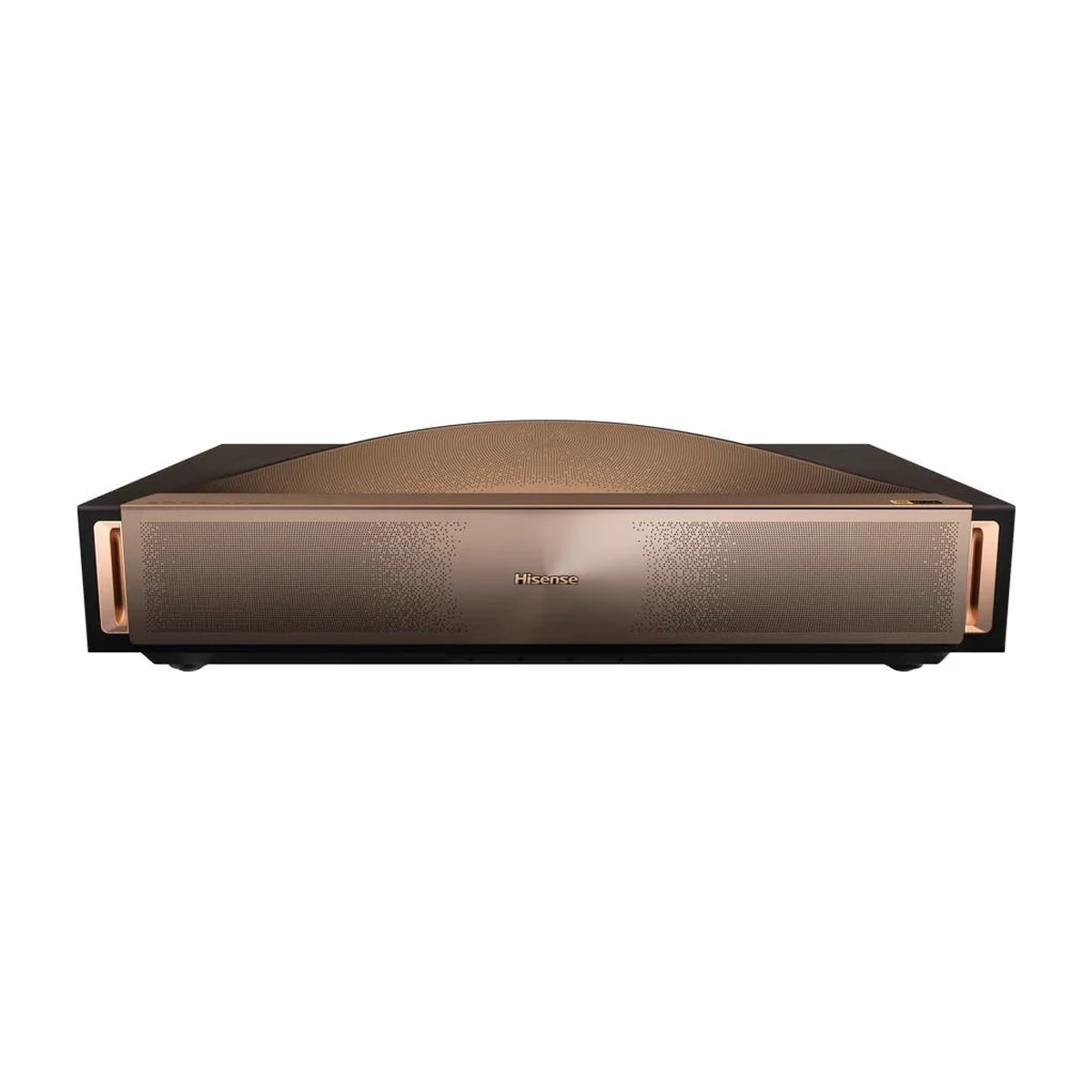
For the projector route, add three lines. The projector: from $1,699 to about $6,000 in our comparison on November 13, 2026, with strong choices at $1,699 (XGIMI MIRA Pro) and $2,499.99 (Hisense PX3-PRO). The screen: $500 to $1,500 for a 100 to 120-inch UST ALR screen, more for a motorized floor-rising one. And possibly a soundbar, which you might buy for a TV too.
So a complete 100-inch setup starts around $2,300 and a very good 120-inch one lands between $3,500 and $4,500. Compare that with the price of a 98 or 100-inch television on the day you shop; they move a lot at sale time. Then compare at 120 inches, where the projector usually has no TV to compete with at any sane price. Some brands bundle the screen: see UST projector and screen bundles.
So which should you buy?
Buy a TV if you want 85 inches or less, if your room is flooded with sun, or if you want the deepest blacks without thinking about screens and curtains. Nothing wrong with that; it is the easy answer for most living rooms.
Buy a UST projector if you want 100 inches or more, if movie nights and big games are the point, or if you like a living room that isn't dominated by a black rectangle. Pick the brightness for your room, budget for the right screen, and you get something a TV can't give you at the price. Our overall ranking of the best ultra short throw projectors starts with the one that does the most, and the best value sits right behind it.
The projectors in this guide, side by side
| Projector | ||||
|---|---|---|---|---|
| Brightness (brand) | 5,000 ANSI lumens | 3,000 ANSI lumens | 3,000 ISO lumens | 2,300 ISO lumens |
| Light source | RGB triple laser | RGB triple laser | RGB triple laser | Laser + LED hybrid |
| Throw ratio | 0.18:1 | 0.22:1 | 0.175:1 | 0.177:1 |
| Native contrast | 5,000:1 | 3,000:1 | Not stated | Not stated |
| HDR formats | Dolby Vision, HDR10+, IMAX Enhanced | Dolby Vision, HDR10+, IMAX Enhanced | Dolby Vision, HDR10+ | Dolby Vision, IMAX Enhanced |
| Lowest input lag | 12 ms (brand) | No figure | 1 ms (brand) | 20 ms (brand) |
| Smart TV | Google TV with Netflix | Google TV with Netflix | Google TV | Google TV with Netflix |
| Warranty | 2-year | 2-year | 2-year | 2-year |
| Where to buy | Check price at Hisense | Check price at Hisense | Check price at XGIMI | Check price at XGIMI |
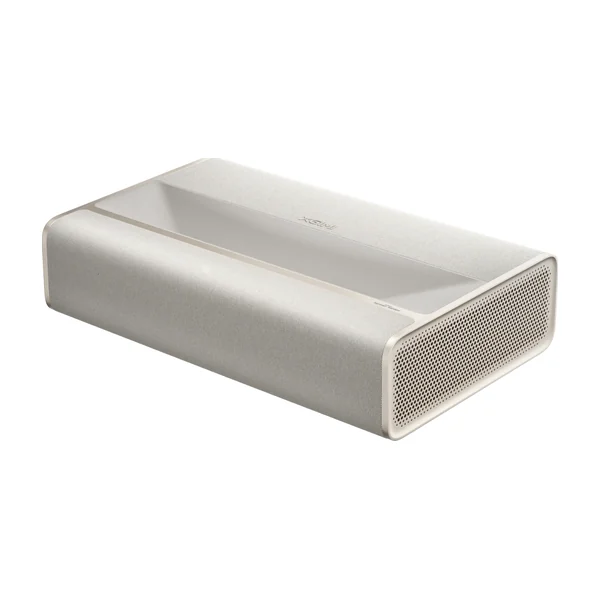
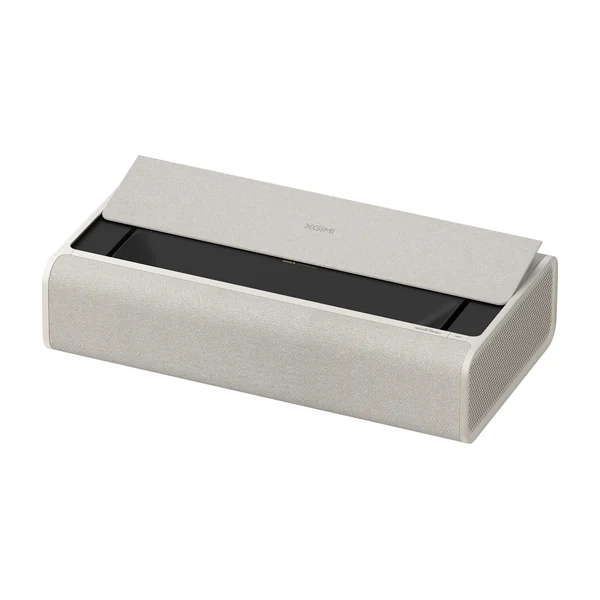
✓ marks the best figure of the row. Prices checked November 13, 2026 on each brand's own US store.