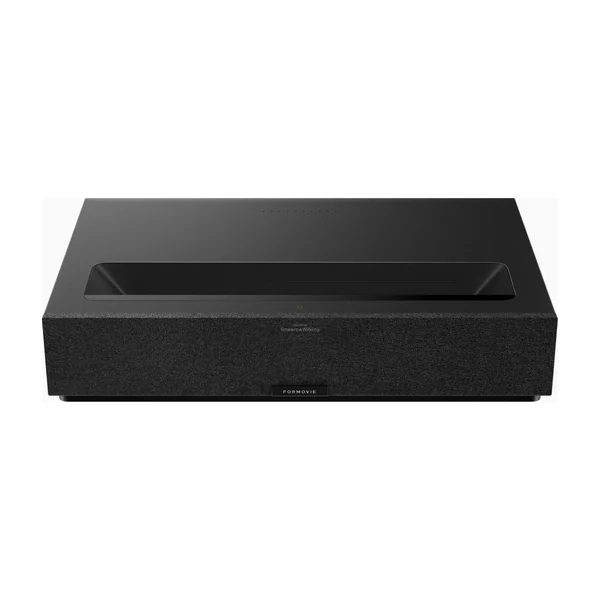
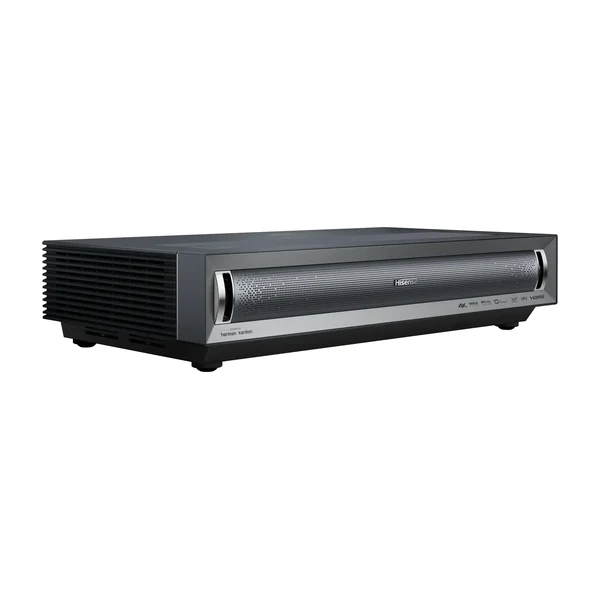
Is the Epson Lifestudio Grand worth buying?
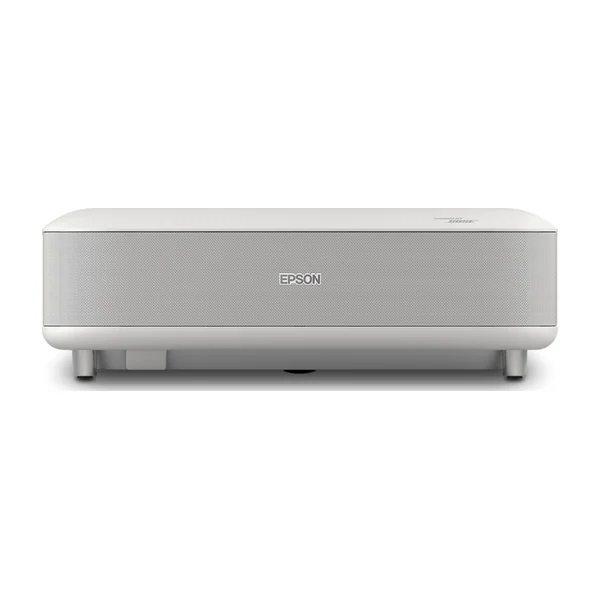
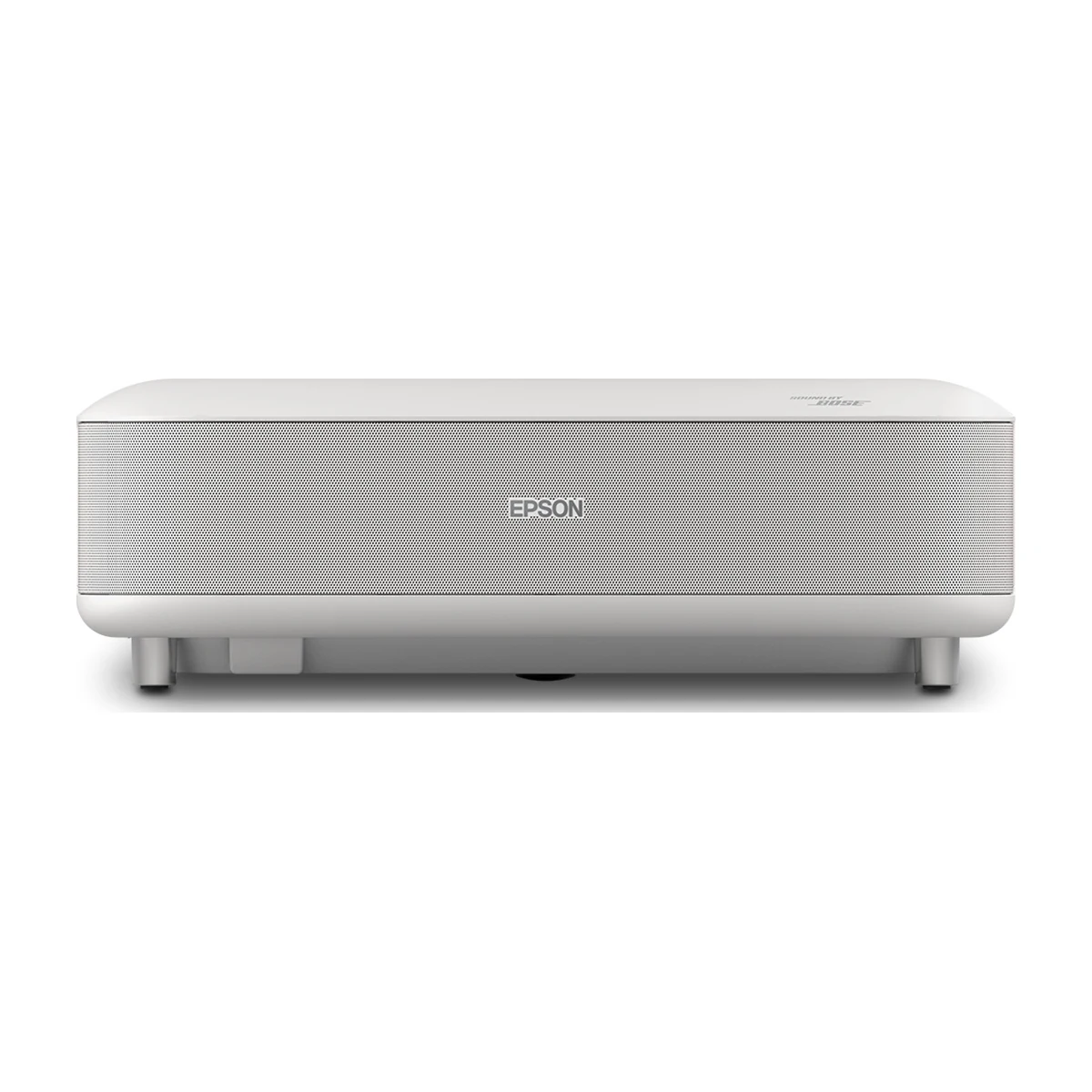
The Lifestudio Grand is the odd one out here, on purpose. Every other projector on this list uses a DLP chip; Epson uses three LCD panels, which means equal color and white brightness (3,600 lumens each, per Epson) and no rainbow flashes for the people who see them. You get Google TV with Netflix, a 2.1 "Sound by Bose" speaker system, a 2-year warranty, free shipping and free 30-day returns from the Epson Store. It cost $2,699.99 on November 13, 2026. The catch: "4K PRO-UHD" is a 1080p panel with pixel shifting, there is no Dolby Vision, and the picture stops at 120 inches.
Buy it if
- Someone at home sees rainbow flashes on DLP projectors, or gets headaches from them
- You want a bright daytime picture and simple, generous return terms
- A 100 to 120-inch picture is big enough
Skip it if
- You want Dolby Vision and the widest color: the Hisense PX3-PRO has both for $200 less
- You want more than 120 inches: almost every rival reaches 150
What is the rainbow effect, and why does 3LCD avoid it?
A single-chip DLP projector shows red, green and blue one after the other, very fast, and your brain blends them. Some people catch the sequence instead: brief red, green and blue flashes on bright objects against a dark background, especially when their eyes move. Most viewers never notice. The ones who do can't stop noticing.
Epson's 3LCD design uses three panels, one per color, lit at the same time, so there is no sequence to catch. It is also why Epson states the same 3,600 lumens for color brightness and for white brightness. If you have never watched a DLP projector, try to see one before buying, or pick a seller with free returns. Epson's own store gives 30 days.
Is "4K PRO-UHD" real 4K?
Not natively, and Epson says so in its footnotes. The Lifestudio Grand uses 1080p LCD panels and shifts each pixel diagonally, very fast, to put more addressable detail on screen. From a sofa nine or ten feet from a 100-inch picture, the result looks sharp, and most people wouldn't pick it out from a DLP "4K" projector, which also uses pixel shifting from a lower-resolution chip, only with more steps.
Where you pay for it is elsewhere on the spec sheet: no Dolby Vision, no stated contrast or gamut. In our formula those blanks score low, which puts the Epson at 8.3/10. If your priority is a bright, comfortable family picture, that score undersells it. If you chase reference movie quality, the PX3-PRO comparison shows what $200 less buys elsewhere.
What's in the box?
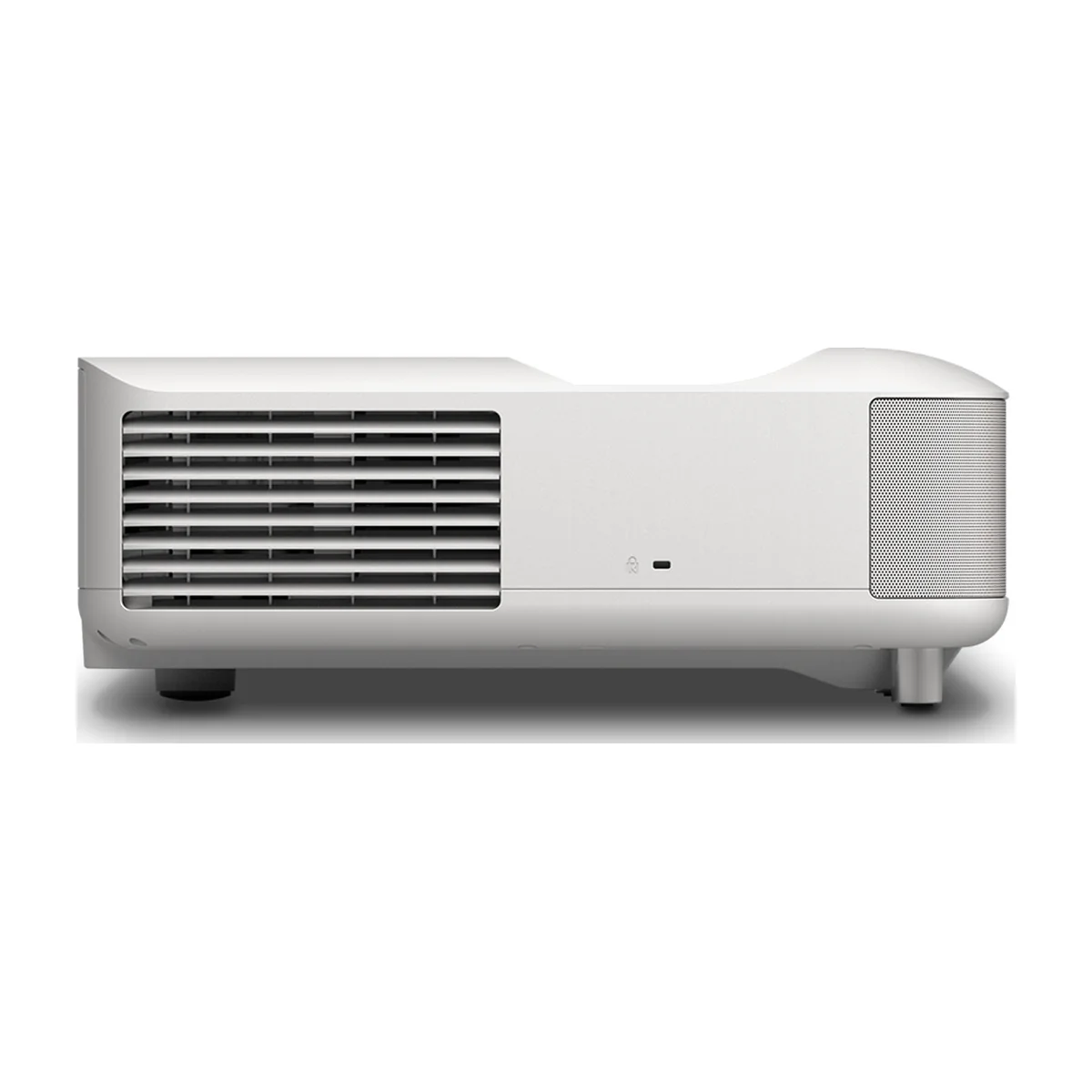
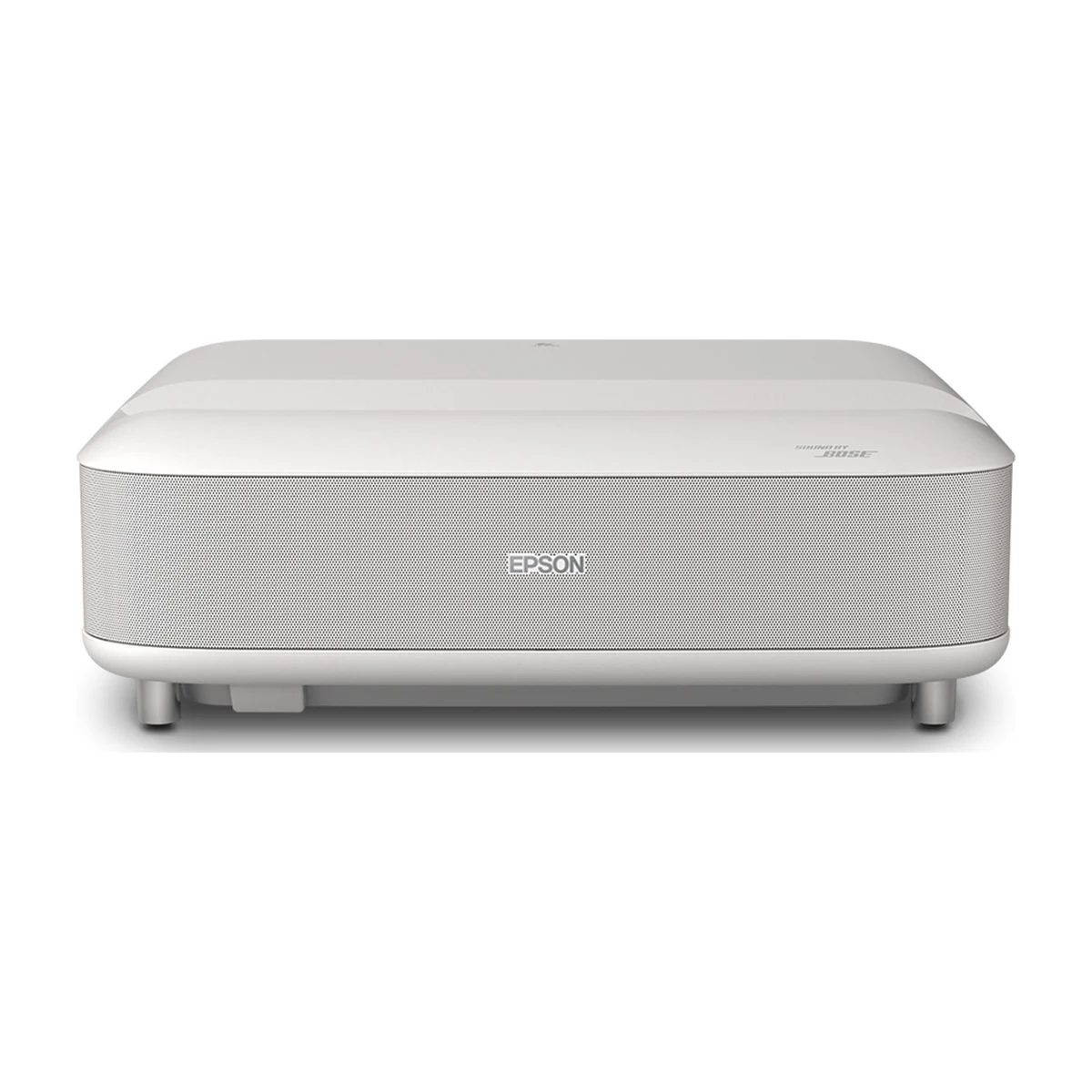
Per Epson: the Lifestudio Grand projector, a power cable with AC adapter, and a remote control with two AAA batteries. It comes in white or black at the same price.
How do you set it up?
The Lifestudio Grand weighs 16.6 lb and measures 18.4 by 15.7 by 6.2 inches. With a 0.25:1 throw ratio, the lens plane sits about 21.8 inches from the screen for a 100-inch picture and 26.1 inches for 120, so plan a deep console. Focus is manual: set the picture size by sliding the projector, then turn the focus control until text is crisp. Sign in to Google TV and you are done.
For another picture size, our throw distance calculator works out the gap between lens and screen for the Lifestudio Grand.
What does it really cost?
A screen ($500 to $1,500 for 100 to 120 inches) and possibly a deeper console. Otherwise the Epson Store terms are the friendliest here: free ground shipping and free returns within 30 days. Epson also sells a Lifestudio Grand Plus at $3,799.99; we haven't scored it.
Per 1,000 lumens claimed, that is $750: the figure our tie-break uses when two projectors land on the same score.
What do we like, and what should you know?
- 3,600 lumens of both color and white brightness, per Epson
- 3LCD: no color wheel, so no rainbow effect
- Google TV with Netflix; 2.1 "Sound by Bose" speakers
- ALLM, 1080p at 120 Hz, and input lag below 20 ms per Epson
- 2-year limited warranty, free ground shipping, free 30-day returns
The catch: Epson's own footnote says 4K PRO-UHD uses a 1080p panel with pixel shifting; it is not a native 4K chip. HDR support is HDR10 and HLG only, with no Dolby Vision or HDR10+. Epson states no native contrast or color gamut figure, focus is manual, and the 0.25:1 throw needs a deep console.
Epson Lifestudio Grand specifications
| Price | $2,699.99 at Epson, checked November 13, 2026 |
|---|---|
| Shipping | Free ground shipping on the Epson Store |
| Light source | Laser with 3-chip 3LCD (no color wheel, so no rainbow effect) |
| Brightness | 3,600 ISO lumens, per Epson |
| Resolution | "4K PRO-UHD": a 1080p 3LCD panel with pixel shifting, per Epson's footnote with pixel shift |
| Imaging chip | 3LCD |
| Native contrast | Native figure not stated |
| Color gamut | Not stated |
| HDR formats | HDR10, HLG |
| Throw ratio | 0.25:1 |
| Lens to screen | 21.8 in for a 100-inch picture, 26.1 in for 120 inches |
| Picture size | 60 to 120 in |
| Focus | Manual |
| Alignment | Manual keystone |
| Input lag | Below 20 ms, per Epson |
| Gaming features | 120 Hz, ALLM |
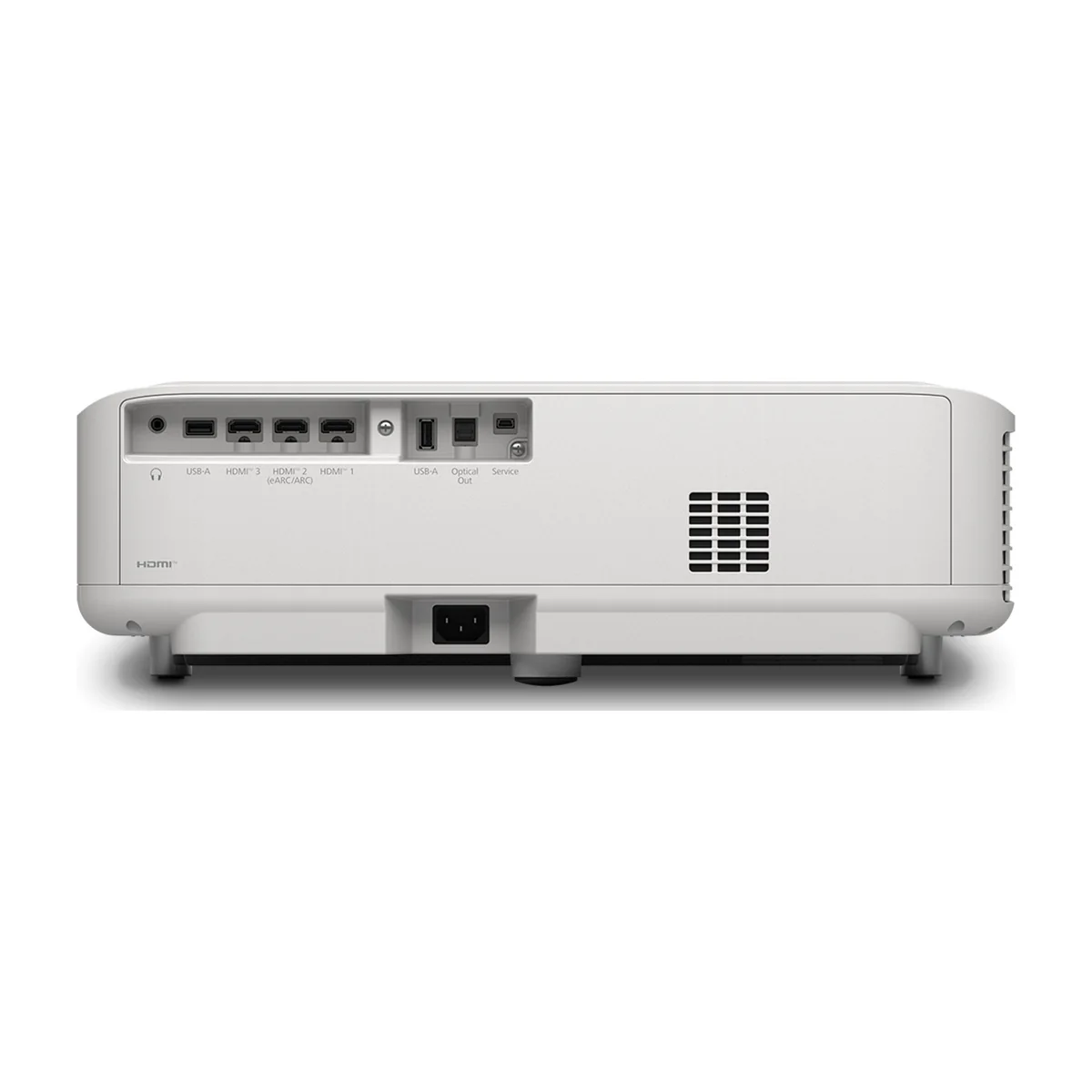
| Inputs | HDMI with eARC |
| Wi-Fi | Not stated |
| Smart TV | Google TV with Netflix |
| Speakers | 20 W 2.1 "Sound by Bose" |
| Fan noise | No dB figure |
| Size (W × D × H) | 18.4 × 15.7 × 6.2 in |
| Weight | 16.6 lb |
| Laser life | 20,000 hours, per Epson |
| Warranty | 2-year limited warranty, per Epson |
| Returns | Free 30-day returns on the Epson Store |
| Screen bundle | None on the product page |
| Price per 1,000 lumens | $750 per 1,000 lumens |
"Not stated" means Epson doesn't publish the figure on the pages we read on November 13, 2026.
Why 8.3/10? The score, criterion by criterion
Each criterion is marked from the figure Epson publishes; anything it doesn't publish gets the lowest mark. The weighted result is placed on our 7.5 to 9.6 scale. The scales and the weights are on our methodology page.
| Price, against the catalog median (dated, US) (20%) | Good |
|---|---|
| Brightness (lumens claimed by the brand) (20%) | Strong |
| Picture: color gamut, native contrast, HDR formats (20%) | Not published: lowest mark |
| Gaming: input lag, 120 Hz, VRR, ALLM (10%) | Average |
| Placement: throw ratio, picture size, focus and alignment aids (10%) | Weak |
| Smart TV and sound: streaming apps, speakers, Atmos, eARC (10%) | Average |
| Warranty and return window (10%) | Good |
How much is the Epson Lifestudio Grand, and where do you buy it?
$2,699.99 on Epson's own US store on November 13, 2026.
If that is more than you planned, the Hisense PX3-PRO costs $2,499.99 and scores 9.1/10. One step up, the Formovie Theater Premium is $2,799 for 8.6/10. We link to the brand's store because that is where we read the price and the stock.
What should you ask Epson first?
- What are the native contrast ratio and the color gamut coverage?
- Does the 2-year limited warranty include the laser light source?
- Is the free 30-day return valid once the projector has been used?
- Which screen types does Epson recommend for this throw ratio?
Which projectors should you compare it with?
The two closest in price: Formovie Theater Premium ($2,799, 8.6/10) and Hisense PX3-PRO ($2,499.99, 9.1/10). Put all three side by side.
Head-to-heads: Hisense PX3-PRO vs Epson Lifestudio Grand. Its closest rivals, compared with each other: AWOL Vision Aetherion Max vs Hisense PX3-PRO.
Rankings with this projector: best ultra short throw projectors, best ust projector for bright room, best ust projector for gaming.
Guides that mention it or help you decide: UST projector vs TV.
Where do these figures come from?
- epson.com/For-Home/Projectors/Streaming-Entertainmen…, read November 13, 2026
- epson.com/lifestudio-grand-ultra-short-throw-laser-p…, read November 13, 2026
- epson.eu/en_EU/products/projector/home-cinema/epson…, read November 13, 2026